
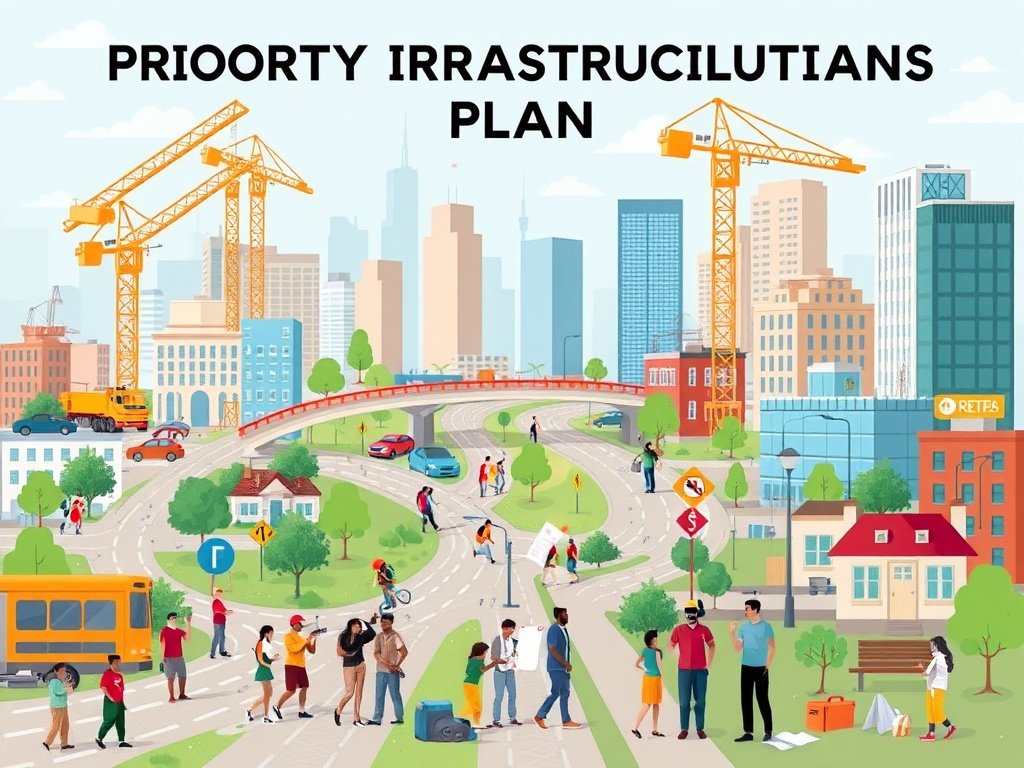
The Priority Infrastructure Plan 2026 is a strategic framework designed to accelerate economic growth, attract investment, and modernize essential public systems such as transport, energy, and digital connectivity. By focusing on high-impact projects, transparent funding, and sustainable development, the plan aims to improve productivity, create jobs, and strengthen long-term national competitiveness while ensuring balanced regional progress and environmental responsibility.
This comprehensive guide explains how a forward-looking infrastructure strategy can reshape economic development, improve public services, and unlock private investment opportunities. It explores planning priorities, funding models, sustainability goals, governance reforms, and long-term social benefits. Readers will gain clear insight into how coordinated infrastructure expansion supports innovation, employment, and regional equality. The article also highlights risks, implementation challenges, and measurable outcomes that determine success. Overall, it presents a practical roadmap for policymakers, investors, and citizens seeking inclusive, resilient, and future-ready national development.
Strategic Vision Behind Modern Infrastructure Planning
Long-Term National Transformation Goals
Modern infrastructure planning is no longer limited to roads and bridges; it represents a complete transformation of economic capability and social wellbeing. Governments now design integrated systems that connect transportation, clean energy, logistics, housing, and digital services into a unified growth engine. This vision emphasizes resilience, efficiency, and inclusivity so that development benefits both urban and rural populations. Strong planning also reduces inequality, improves productivity, and prepares economies for technological change. A clearly defined long-term direction ensures that every investment contributes to sustainable national progress rather than short-term political gains.
Economic Growth Through Coordinated Investment
Productivity, Trade, and Job Creation
Large-scale infrastructure investment stimulates multiple sectors simultaneously, creating employment during construction and improving productivity after completion. Efficient transport corridors reduce logistics costs, reliable electricity supports industry, and digital connectivity enables innovation and entrepreneurship. These combined effects expand trade capacity and attract foreign investors seeking stable operating environments. When projects are carefully prioritized, economic returns multiply across regions instead of concentrating in a few cities. Coordinated funding therefore becomes a powerful mechanism for accelerating inclusive development while strengthening national competitiveness in an increasingly interconnected global economy.
Funding Models and Financial Sustainability
Public, Private, and Blended Financing
Sustainable infrastructure expansion depends on diversified funding rather than sole reliance on public budgets. Governments increasingly use blended finance models that combine state resources, development partners, and private sector participation. Public-private partnerships distribute risk, improve efficiency, and accelerate project completion when managed transparently. Long-term revenue streams such as tolls, service fees, or energy tariffs help maintain financial stability without excessive debt. Clear regulatory frameworks and investor confidence are essential to ensure accountability. Strong financial planning ultimately determines whether ambitious infrastructure visions translate into real, lasting economic value.
Transport Networks as Development Catalysts
Mobility, Logistics, and Regional Integration
Efficient transport systems form the backbone of economic expansion by connecting production centers, markets, and communities. High-quality highways, rail corridors, ports, and urban transit reduce travel time and operational costs for businesses and citizens alike. Improved mobility encourages tourism, trade, and labor movement while strengthening regional cooperation. Strategic corridor development can transform previously isolated areas into thriving economic zones. When transport planning aligns with industrial and agricultural strategies, the overall impact on national income and employment becomes significantly stronger and more sustainable.
Energy Infrastructure and Future Security
Reliability, Affordability, and Clean Transition
Reliable energy supply remains essential for industrialization, digital services, and household wellbeing. Modern infrastructure strategies prioritize diversified energy sources, upgraded transmission networks, and investment in renewable technologies. Clean energy expansion reduces environmental risks while improving long-term affordability and energy independence. Smart grids and storage solutions enhance efficiency and resilience against disruptions. By aligning energy planning with climate commitments and economic needs, nations can secure stable growth without sacrificing environmental responsibility or future resource availability.
Digital Connectivity and Innovation Ecosystems
Broadband, Data, and Smart Governance
Digital infrastructure now plays a central role in education, healthcare, commerce, and governance. Expanding broadband access enables remote learning, telemedicine, and online entrepreneurship, especially in underserved regions. Data centers, cloud systems, and cybersecurity frameworks support modern public administration and private innovation. Smart technologies also improve urban management through real-time monitoring of traffic, utilities, and public safety. Strong digital foundations therefore accelerate knowledge-based economies and empower citizens with new opportunities for participation and productivity in an increasingly connected world.
Also read this: Who Is Steven Cobery? Complete Biography, Career Journey & Achievements
Urban Development and Livable Cities
Housing, Services, and Sustainability
Rapid urbanization requires thoughtful planning to prevent congestion, pollution, and informal expansion. Integrated city development focuses on affordable housing, efficient public transport, green spaces, and reliable utilities. Mixed-use zoning encourages economic activity while reducing commuting pressure. Sustainable construction methods lower environmental impact and operating costs over time. Livable cities enhance quality of life, attract investment, and support innovation clusters. Balanced urban planning ensures that population growth becomes an opportunity for prosperity rather than a source of social and environmental strain.
Rural Infrastructure and Inclusive Progress
Connectivity, Agriculture, and Social Equity
Inclusive development depends on extending infrastructure benefits beyond major urban centers. Rural roads, irrigation systems, storage facilities, and digital access strengthen agricultural productivity and local entrepreneurship. Improved healthcare and education facilities reduce migration pressure and support community stability. When rural regions gain reliable connectivity, national supply chains become more resilient and balanced. Investment in underserved areas therefore promotes social equity while unlocking untapped economic potential that contributes to overall national prosperity.
Environmental Sustainability and Climate Resilience
Green Design and Risk Management
Modern infrastructure must address climate risks such as floods, heatwaves, and resource scarcity. Sustainable design incorporates renewable materials, energy efficiency, and ecosystem protection. Nature-based solutions like urban forests and wetland restoration enhance resilience while improving living conditions. Long-term planning reduces disaster recovery costs and protects vulnerable communities. Integrating environmental safeguards into development strategies ensures that growth remains durable, responsible, and aligned with global sustainability commitments.
Governance, Transparency, and Accountability
Institutional Strength and Public Trust
Effective governance determines whether infrastructure projects deliver promised benefits. Transparent procurement, independent oversight, and community engagement reduce corruption and delays. Clear performance metrics allow policymakers to monitor progress and adjust strategies when necessary. Strong institutions build investor confidence and public trust, both essential for long-term success. Accountability mechanisms therefore transform infrastructure spending into measurable social and economic outcomes rather than uncertain political initiatives.
Technology Integration in Construction and Planning
Automation, Data Analytics, and Efficiency
Advanced construction technologies improve speed, safety, and cost control across major projects. Digital modeling, automation, and predictive analytics enable accurate planning and reduce resource waste. Real-time monitoring helps identify risks before they escalate into delays or budget overruns. Innovation in materials and engineering also extends infrastructure lifespan while lowering maintenance needs. Technology-driven development ultimately maximizes value for both governments and citizens through smarter, more efficient project execution.
Social Impact and Community Wellbeing
Employment, Services, and Opportunity
Infrastructure investment directly influences everyday life by improving access to jobs, education, healthcare, and public services. Construction phases create employment, while completed systems enable long-term economic participation. Safer roads, reliable utilities, and digital inclusion enhance social stability and opportunity. Community engagement during planning ensures that development reflects real needs rather than assumptions. Strong social outcomes demonstrate that infrastructure is not merely physical construction but a foundation for human progress and dignity.
Implementation Challenges and Risk Factors
Delays, Costs, and Policy Continuity
Despite ambitious planning, infrastructure programs often face delays, funding shortages, or regulatory hurdles. Political transitions may shift priorities, slowing long-term projects. Cost overruns and land acquisition disputes can further complicate execution. Effective risk management requires stable policy direction, transparent communication, and realistic budgeting. Addressing these challenges early improves the likelihood of timely completion and sustainable benefits for future generations.
Measuring Success and Long-Term Outcomes
Economic Indicators and Quality of Life
Successful infrastructure strategies deliver measurable improvements in productivity, employment, trade efficiency, and environmental performance. Social indicators such as healthcare access, education quality, and urban livability also reflect progress. Continuous evaluation ensures accountability and guides future investment decisions. Long-term monitoring transforms infrastructure from isolated projects into an evolving national development system that adapts to changing economic and technological conditions.
Future Outlook and Strategic Continuity
Preparing for Emerging Global Trends
Forward-looking planning anticipates technological disruption, demographic change, and environmental pressures. Adaptive infrastructure systems allow nations to respond quickly to evolving global realities. Continuous innovation, stable governance, and inclusive investment remain essential for sustained prosperity. The Priority Infrastructure Plan 2026 represents a milestone in this ongoing journey toward resilient, equitable, and future-ready development that benefits both current citizens and coming generations.
Conclusion
A well-designed national infrastructure strategy shapes economic strength, social equity, and environmental resilience for decades. By aligning investment priorities, governance standards, and sustainability principles, long-term development becomes achievable and measurable. The Priority Infrastructure Plan 2026 highlights how coordinated planning can unlock productivity, attract capital, and improve everyday life. Continued commitment, transparent execution, and adaptive innovation will ultimately determine whether these ambitions translate into lasting national progress.
FAQs
1. What is the main purpose of this infrastructure strategy?
Its goal is to accelerate economic growth, improve public services, and support sustainable national development.
2. How does infrastructure attract investment?
Reliable transport, energy, and digital systems reduce business risk and increase productivity for investors.
3. Why is sustainability important in development planning?
It protects natural resources, reduces climate risks, and ensures long-term economic stability.
4. What role does technology play in infrastructure?
Technology improves efficiency, monitoring, safety, and long-term maintenance of major projects.
5. How does infrastructure support rural communities?
Better roads, irrigation, connectivity, and services strengthen agriculture and local economies.
6. What challenges commonly affect large projects?
Funding gaps, regulatory delays, land issues, and political uncertainty can slow implementation.
7. How is long-term success measured?
Through productivity growth, improved quality of life, environmental performance, and inclusive economic opportunity.
Fore mroe info: Swiftmagazines.co.uk
